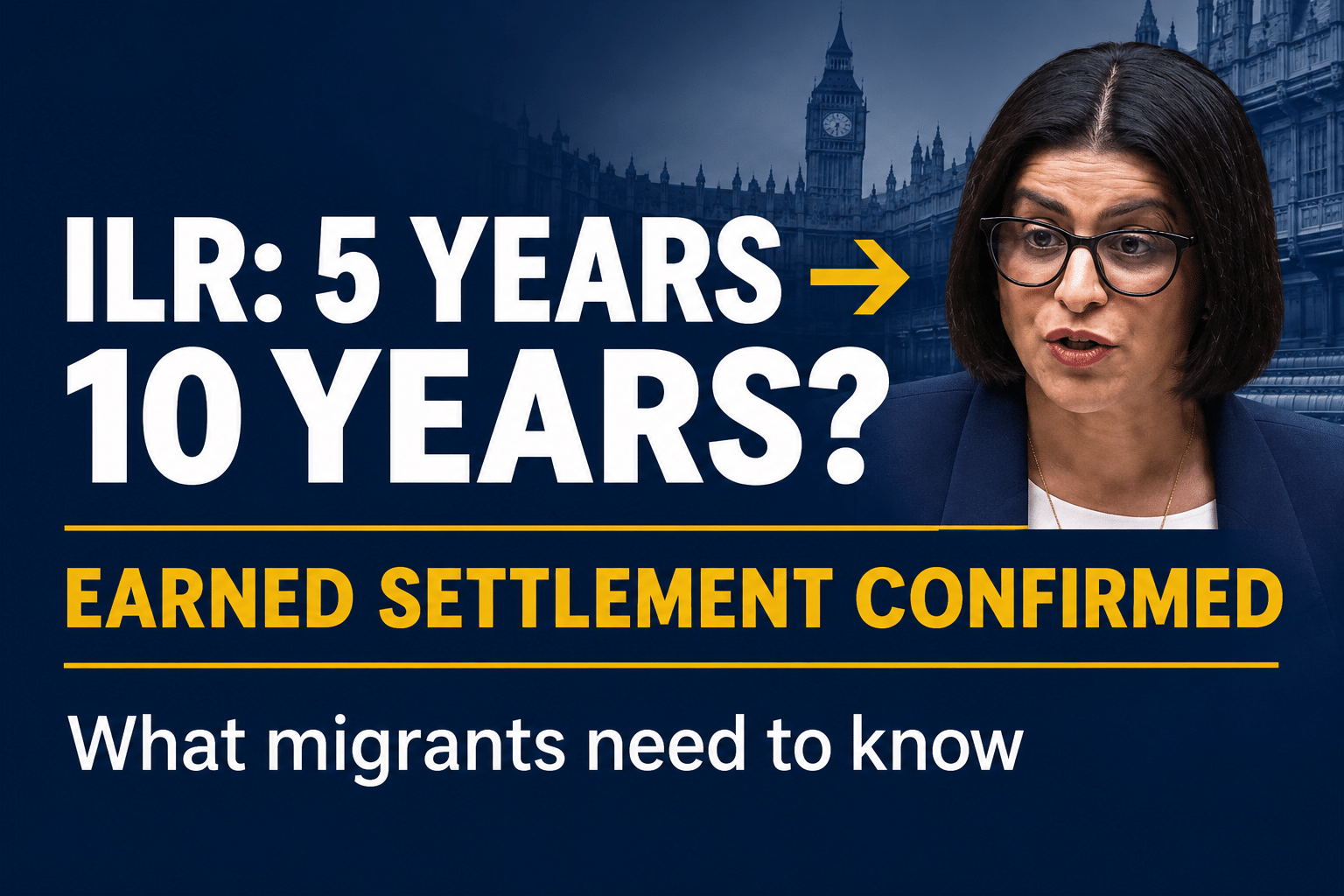
Today, earlier this afternoon, the Home Secretary, Shabana Mahmood, told the House of Commons the Government’s final position on “earned settlement” as published in the government publications with the hearing “Settlement will be earned through contribution and good character.” In our June guide we set out what was being proposed. We now have the confirmed direction of travel, and it is a mixture of welcome clarity and real cause for concern.
In this follow-up, we cover what has been confirmed, what is positive, what is worrying, and what is still unknown. This article is based on the Home Secretary’s statement to Parliament. The full policy document and the Immigration Rules changes will need to be read carefully when they are available, and we will update this page as they are.
The Headline Changes at a Glance
- Standard route: The qualifying period for Indefinite Leave to Remain (ILR) rises from 5 to 10 years for most migrants.
- 5-year route: Those earning over £50,000 a year, and those in public service professions such as doctors, nurses and teachers.
- 3-year route: Those earning over £125,000 a year and those arriving through the UK’s highest-talent schemes.
- Everyone else, including those earning under £50,000: A 10-year route, with the ability to keep renewing existing temporary visas until they qualify.
- Refugees: 5 years via new safe and legal routes; 20 years for those who arrived by other routes; 30 years for those who entered illegally, including by small boat. Entering work or education reduces the period by 10 years.