Difference Between Titles :Solicitor, Lawyer and Advisor

Many people are unsure about the difference between an immigration solicitor, lawyer and immigration adviser. These terms are often used interchangeably, but they describe different professional backgrounds and regulatory systems.

Choosing the right person to assist with an immigration matter is important. Before instructing anyone, clients should understand who is advising them, what qualifications they hold and which regulatory body supervises their work.

What is a Lawyer?

The term “lawyer” is a general term used to describe someone who has studied law or works within the legal profession.

In England and Wales, the title “lawyer” is not, by itself, a protected professional title. Solicitors and barristers are both lawyers, but they undertake different training routes and have different roles within the legal system.

A person who studies law at university may develop a foundation in legal principles, but further professional training is required before they can practise as a solicitor or barrister.

Trainee Solicitor

A trainee solicitor is someone who has completed the academic stage of legal education and is undertaking supervised practical training before qualifying as a solicitor.

Traditionally, the route to becoming a solicitor involved:

  • A qualifying law degree, or a non-law degree followed by a conversion course;
  • Completion of the Legal Practice Course (LPC);
  • A period of recognised training within a solicitors’ firm.

During this period, trainees develop practical skills including legal research, drafting, advocacy, client care and applying legal principles to real cases.

What is an Immigration Solicitor?

An immigration solicitor is a solicitor who specialises in immigration law.

After qualifying as a solicitor, many practitioners choose to focus their practice on specific areas of law. Immigration law is a highly specialised field which requires regular updates because immigration rules, legislation and case law change frequently.

Immigration solicitors may undertake additional specialist training, including courses and accreditation schemes, to develop their expertise in areas such as:

  • Family immigration;
  • Work visas;
  • Settlement and nationality;
  • Asylum and protection claims;
  • Human rights applications;
  • Appeals and judicial review.

Solicitors are regulated by the Solicitors Regulation Authority (SRA) and must comply with professional conduct rules. Solicitors’ firms must maintain appropriate professional indemnity insurance and have procedures for handling complaints.

What is an Immigration Adviser registered with the OISC?

At the time this article was written, immigration advisers who were not solicitors or barristers were generally regulated by the Office of the Immigration Services Commissioner (OISC).

The OISC regulated immigration advisers and required them to meet certain competence and conduct requirements before they could provide immigration advice.

Unlike solicitors, OISC advisers did not qualify through the solicitor training route. Instead, they followed the OISC authorisation process, which included demonstrating competence at the appropriate level and complying with OISC rules.

OISC advisers came from a variety of backgrounds. Some had legal qualifications or previous legal experience, while others developed their expertise through immigration practice and specialist training.

The level of authorisation granted by the OISC determined the type of immigration work an adviser was permitted to undertake.

Does it Matter Whether You Use a Solicitor or an OISC Adviser?

The most important consideration is whether the person assisting you has the appropriate knowledge, experience and regulatory authority for your particular immigration matter.

Not every immigration case requires the same level of expertise. Some straightforward applications may be suitable for an experienced immigration adviser, while more complex matters involving difficult legal issues may require specialist legal advice.

For example, cases involving:

  • Complex human rights arguments;
  • Appeals;
  • Judicial review;
  • Challenging previous decisions;
  • Complex nationality issues;
  • Interpretation of legislation and case law;

may require someone with specialist legal experience.

However, the experience and ability of the individual adviser remain important factors. A highly experienced OISC adviser may have significant expertise in particular areas of immigration law, just as a solicitor who does not specialise in immigration may not have the same level of immigration knowledge.

Checking Who is Advising You

Before instructing anyone, clients should ask:

  • What professional qualifications do you hold?
  • Which organisation regulates you?
  • Are you authorised to provide immigration advice?
  • What experience do you have with cases like mine?
  • What are your fees and what services are included?

Clients should always ensure they understand who is handling their case and what level of service they can expect.

Professional Standards

Regardless of whether a client instructs a solicitor or an OISC adviser, professional standards are important.

A professional representative should:

  • Explain fees clearly;
  • Provide honest advice;
  • Keep clients informed about progress;
  • Maintain proper records;
  • Act within the rules of their regulator.

Unfortunately, members of any profession can fail to meet expected standards. The best protection for clients is to check the person’s regulatory status, experience and reputation before making payment.

Immigration Law Requires Specialist Knowledge

Immigration law is a complex and constantly changing area of law. Rules, policies and case law develop regularly, and incorrect advice can have serious consequences for individuals and families.

The choice between a solicitor and an immigration adviser should therefore be based on the specific circumstances of the case, the complexity of the matter and the experience of the person providing the advice.

The most important question is not simply the title someone uses, but whether they have the right expertise and authorisation to assist with your immigration matter.

Warning!

So the next time you are seeking legal assistance on your Immigration matter, Know whom your paying for? And as the saying goes – you get what you paid for!

I know there is a lot of horror stories out there and I hope this post does not come too late for most of you, but I would be interested to know the views, experience and any comment on legal representation that you may have had – I hope that this post protects many of you from been ripped off and please feel free to comment, share and like

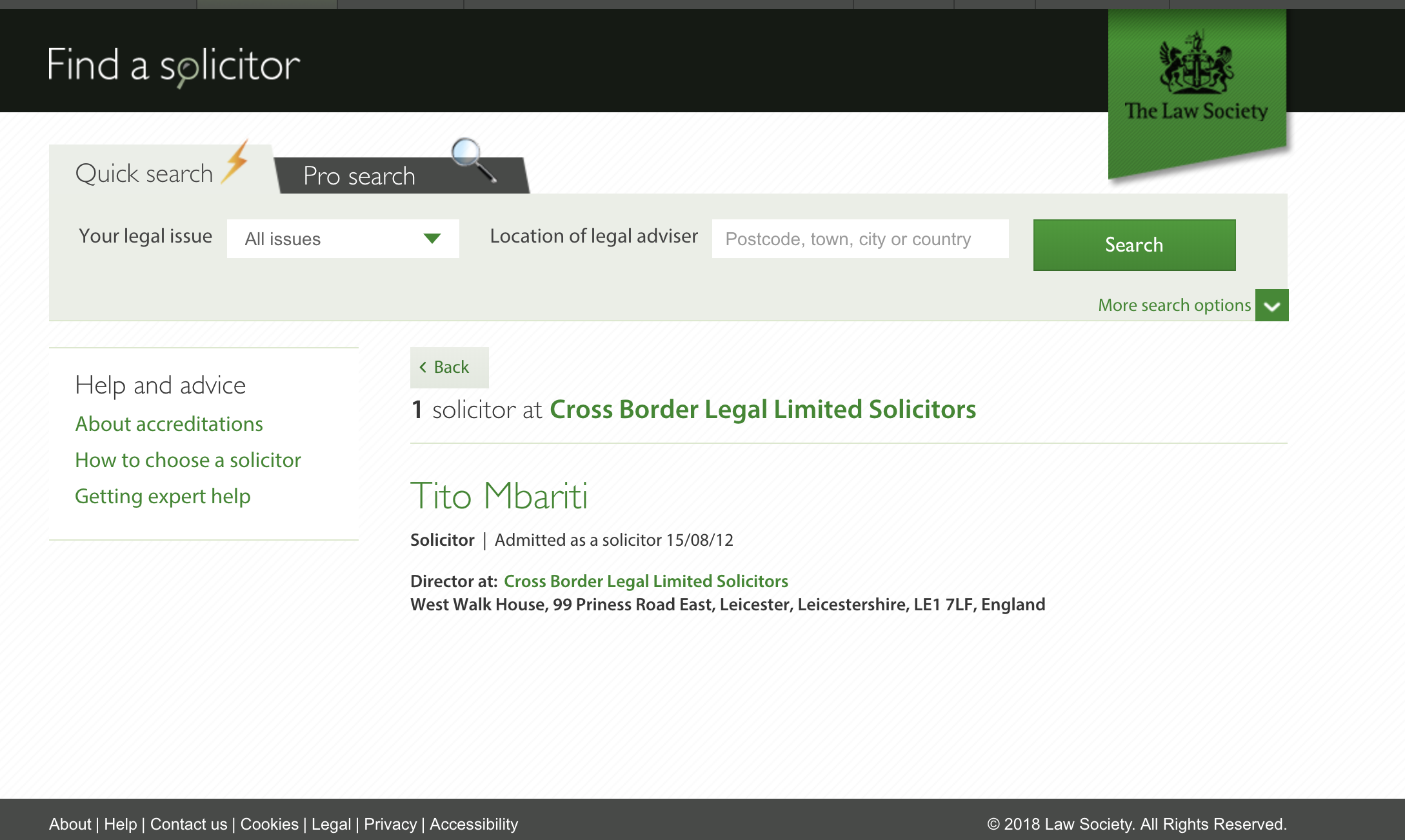
If anyone has an immigration inquiry, please contact for a free initial consultation on my Mobile (07544669131) or Skype: tito.mbariti, I am an Immigration Solicitor Specialized in Immigration and Human Rights.

Home Office appeals against recent High Court judgment on minimum income threshold

Home Office Statement:

“We believe matters of public policy, including the detail of how the minimum income threshold should operate, are for the Government and Parliament to determine, not the Courts. ….”

The long awaited news is out today( 27.7.2013), but No! The Home Office will not be releasing a statement on how they intend to comply with the recent high court decision but will be appealing!

This is to the disappointment of many, especially couples who have been waiting with baited breath to make their spouse visa application following the recent High Court ruling that recommended that the Home Office reduce and ease the  requirement for the minimum income threshold (Currently £18,600 for a couple). Continue Reading →

EU Family Route: What is Surinder Singh route?

Those of you that have kept up-to-date with the recent immigration news or are  in the process of trying to bring their foreign Non-EU Spouse into the UK , would have possibly heard of the so called EU Family Route or ‘Surinder Singh’ route. This is a route that is becoming an increasingly popular (or necessary) option for Britons who seek to reunite with their spouse having fallen foul of the current immigration rules.

Why EU Route?

In case you haven’t been in the loop on what is happening; say you are a British national and have just gotten engaged to a non-EEA national. Well… congratulations first of all, and second,  I hope you have a very good job, as you will need one. Continue Reading →

Are Family Migration Rules About Change?

Several people have asked me the following questions

“Do you think there will be changes to the rules[Family Immigration Rules on financial Threshold] following the court case. If so, what will happen?”

Well this is my honest opinion. Simple answer is YES! and NO!

Yes! the secretary of state will have to responds, they already have by saying you can still apply even if you don’t meet the finical threshold (see home office website) if the secretary of state failed to consider this courts recommendation then they risk having most of they refusals overturned on appeal on the bases of Article 8 European Conventions on Human Rights . Continue Reading →

Turkish Ankara Agreement

Immigration Options for Turkish nationals –Self Employed Business Person/Turkish worker

Are you a Turkish national? Is your spouse a Turkish National? In the UK or Abroad, but looking to come into the UK or switch your visa to a more permanent visa? Are you a British national married to a Turkish national and worried about the new spouse visa financial requirement, and can’t use the EU route? Are in UK as a student and looking to switch your visa?Well this post my just shine the light on an easier immigration option for you or your partner. Continue Reading →