

Domestic violence can affect anyone, regardless of their immigration status. However, under UK immigration law, not all victims are treated equally. While some people may know that spouses on a UK Spouse Visa can apply for settlement (Indefinite Leave to Remain) if their relationship breaks down due to abuse, a critical gap remains.
What happens if you are in the UK as the dependant of a Skilled Worker visa holder?
As a UK immigration lawyer at Cross Border Legal Solicitors, I regularly receive enquiries from individuals trapped in abusive relationships who fear losing their immigration status if they leave. This is an increasingly common issue facing migrants across the UK, particularly those whose right to remain is financially and legally tied to an abusive partner. The sobering reality is that current UK immigration law offers very limited automatic protection to Skilled Worker Visa dependants facing domestic abuse.
Can a Skilled Worker dependant apply under the domestic violence route?
In short: Usually NO!
The UK’s domestic violence immigration rules and settlement provisions mainly apply to individuals who entered the UK under Appendix FM as:
- Spouses or civil partners of British citizens
- Partners of settled persons (those with ILR)
- Certain partners with refugee or humanitarian protection status
These specific applicants can access the Migrant Victims of Domestic Abuse Concession (MVDAC) (formerly the DDVC) and apply for Indefinite Leave to Remain under Appendix Victim of Domestic Abuse. Unfortunately, dependants of Skilled Worker visa holders are currently excluded from this protective route to settlement.
Why the current system leaves victims vulnerable
The key challenge with a dependent visa is its strong connection to the main Skilled Worker visa holder, which can create an imbalance in power. This dynamic means that if the relationship deteriorates, often in situations where the main applicant is abusive, the dependent spouse may hesitate to seek help or advocate for their rights due to the potential severe consequences. It’s crucial to understand these implications to empower those affected and ensure support is available for anyone experiencing such difficulties. The consequences of standing up for agaist such an abuser could be:
- The dependant may lose their sponsorship-linked status.
- The main visa holder may proactively notify the Home Office to withdraw support.
- The victim may face immediate financial vulnerability, homelessness, or the threat of administrative removal from the UK by the UKVI.
In numerous abusive relationships, immigration status and the threat of visa restrictions can serve as a significant tool for coercive control. Victims often hear comments like, “If you leave, you’ll be deported,” or “You could lose your children.” Sadly, the lack of clear pathways for Skilled Worker dependants facing domestic violence keeps many individuals in precarious and unsafe situations. It’s vital that we work towards improving these circumstances for those in need of support.
Alternative immigration options for Skilled Worker dependants
While there is no straightforward path to settlement, and certainly nothing comparable to what is offered to the spouses of British nationals, there are legal remedies available. Skilled workers should not continue to suffer in silence, even as we advocate for the government to establish a more comparable system to address these circumstances. An experienced UK immigration solicitor can evaluate whether alternative applications can be made based on the specific details of the case.
1. Critical Procedural Bridge: The Migrant Victims of Domestic Abuse Concession
Previously, work visa dependants were entirely excluded from immediate safety nets. Under the updated Home Office policy, dependants of Skilled Workers can now apply for the Migrant Victims of Domestic Abuse Concession (MVDAC). If successful, this grants a temporary 3-month period of independent leave with recourse to public funds.
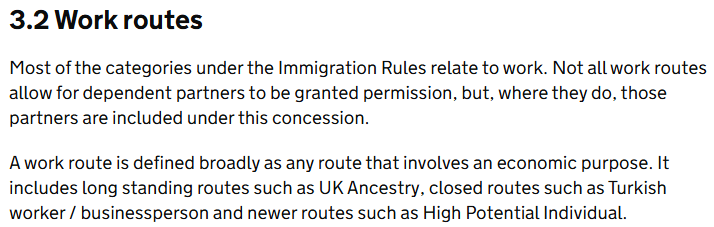
While this concession does not lead directly to indefinite leave to remain for Skilled Worker dependants, it provides a vital, safe window of lawful status. During these three months, the victim can safely remain in the UK away from their abuser, maintain Section 3C status upon submitting a new application, and actively transition to an independent visa route.
2. Leave Outside the Immigration Rules (LOTR)
In exceptional circumstances, it is possible to apply for discretionary leave outside the Immigration Rules. These applications are highly complex and heavily evidence-based. The Home Office will consider factors such as:
- There is objective evidence of domestic abuse and coercive control, which necessitates contacting the police and collaborating with organisations such as general practitioners (GPs) and domestic violence support services.
- There are safeguarding concerns and medical evidence to consider.
- The welfare of any children in the UK must be taken into account.
- Human rights considerations are relevant under Article 8 of the European Convention on Human Rights (ECHR), which protects the right to respect for private and family life.
This visa is often a discretionary option that typically lasts between 6 and 30 months. It’s designed to provide temporary relief for victims, allowing them time to put their affairs in order while the Home Office anticipates their eventual return home. However, this period can be incredibly beneficial, as it enables you to pursue justice by providing evidence to police investigations against the perpetrator. Additionally, it allows your children to complete their exams, helps you find alternative sponsorship for a skilled worker application, or even enables you to explore family arrangement options. Embrace this opportunity to secure a brighter future!
3. Human Rights Applications
Some victims may be able to secure their stay by presenting independent human rights arguments. This includes demonstrating a private life in the UK, establishing family life with children, or highlighting severe risk factors present in their country of origin. When children are involved, the Home Office is required by Section 55 of the Nationality, Immigration and Asylum Act 2002 (Best Interests of the Child) to prioritise the best interests of the child.
For example, this could apply to a spouse with children who have been in the UK for at least seven years, having previously arrived as student dependents, then transitioned to a graduate visa dependent, and eventually to a work visa dependent.
4. Switching into independent visa routes
To remain in the UK as a dependant, the strict legal reality is that the main visa holder must continue to effectively sponsor the dependant applicant. If the relationship breaks down and the separation is reported, that sponsorship effectively ends. However, a significant number of dependants are already working independently in the UK, often in essential sectors such as health and social care.
For an individual already in employment, nothing prevents them from seeking independent sponsorship directly from their current employer or a new approved sponsor. If the applicant meets the relevant eligibility criteria, they may be able to switch into an independent immigration category entirely separate from their partner. Viable independent pathways include:
- A Skilled Worker or Health and Care Worker Visa: If the applicant is employed (for instance, as a carer) and the employer holds a valid sponsor licence, they can issue a Certificate of Sponsorship (CoS). The applicant can then apply to switch from a dependant visa to a main applicant visa from within the UK.
- A Student Visa: Transitioning to a licensed UK educational institution to pursue further studies, which also provides a temporary independent foothold in the UK.
Seek Help: Protection through criminal and family law
It’s essential to understand that a victim’s immigration status does not compromise their right to immediate support. Those facing domestic violence can confidently seek police protection, secure non-molestation and occupation orders, access emergency housing, and receive help from dedicated domestic abuse charities. Importantly, reaching out to emergency services for assistance won’t result in deportation. You’re not alone; support is available!
The importance of early legal advice
Timing is critical in immigration law. A common issue is individuals becoming overstayers because they were unaware of deadlines or the immediate consequences of their separation. Submitting a valid, in-time application is essential because it can preserve a person’s lawful status under Section 3C of the Immigration Act 1971 while the Home Office considers the case. Professional legal advice from a qualified UK immigration solicitor can make the difference between maintaining lawful residence and falling into unlawful overstayer status.
To succeed in highly discretionary or human rights-based claims, compiling robust documentation is vital, as the Home Office evaluates all evidence holistically. A strong evidentiary framework should include a combination of official and personal records, such as police reports, non-molestation or injunction orders, and letters from social services or domestic abuse support charities. Crucially, medical records, GP letters, independent witness statements, and contemporaneous digital evidence, such as text messages or emails demonstrating coercive control and emotional abuse, are heavily relied upon to substantiate the claim when formal criminal reports are absent.
A growing gap in UK immigration law
While the UK government’s recent concession to finally extend domestic abuse protections to Skilled Worker visa dependants is a highly welcome development that addresses a previously glaring exclusion, further robust protections are urgently needed to fully close this restrictive gap in immigration law. For too long, legal practitioners and advocacy groups have highlighted how dependants of Skilled Workers contribute significantly to UK society and the economy, yet were denied the vital safety nets automatically afforded to spouses under Appendix FM.
Unfortunately, most people are completely unaware of these recent changes, meaning this life-saving update remains one of the immigration system’s best-kept secrets. No one should have to suffer in silence due to a lack of awareness; while navigating the remaining rigidities of the system still requires immense care, anyone currently experiencing domestic abuse on a Skilled Worker dependant visa should reach out for support, as a carefully prepared immigration strategy backed by strong evidence is essential for securing long-term stability and safety.
Need Expert Advice from a UK Immigration Solicitor?
Navigating complex UK visa and immigration laws can be stressful. At Cross Border Legal Solicitors, we provide confidential, expert legal counsel tailored to your unique situation. We specialise in handling complex immigration matters, including:
- Skilled Worker Visas (including dependent applications and complex issues)
- Domestic Violence Immigration Claims (secure your status safely)
- Human Rights & Article 8 ECHR Applications
- Leave Outside the Immigration Rules (LOTR)
- Indefinite Leave to Remain (ILR) and Settlement applications
Secure Your Status Today – Contact Our Expert Legal Team
Don’t leave your immigration status to chance. Get direct, professional support from a fully regulated UK law firm.
Fill Out Our Quick Enquiry Form: Submit your details online anytime for a swift response, or Speak Direct to a Solicitor: Call us during office hours on Here are the clickable links for those phone numbers. You can click them to make a call directly from your device:Mobile: 07544 669131. or Landline: 0116 380 0744
Cross Border Legal Solicitors Ltd is a dedicated UK law firm regulated by the Solicitors Regulation Authority (SRA). The firm is headed by Mr. Tito Mbariti, a highly experienced UK Immigration and Human Rights Solicitor and an active member of the Law Society of England and Wales. We deliver strategic, professional legal solutions you can trust.